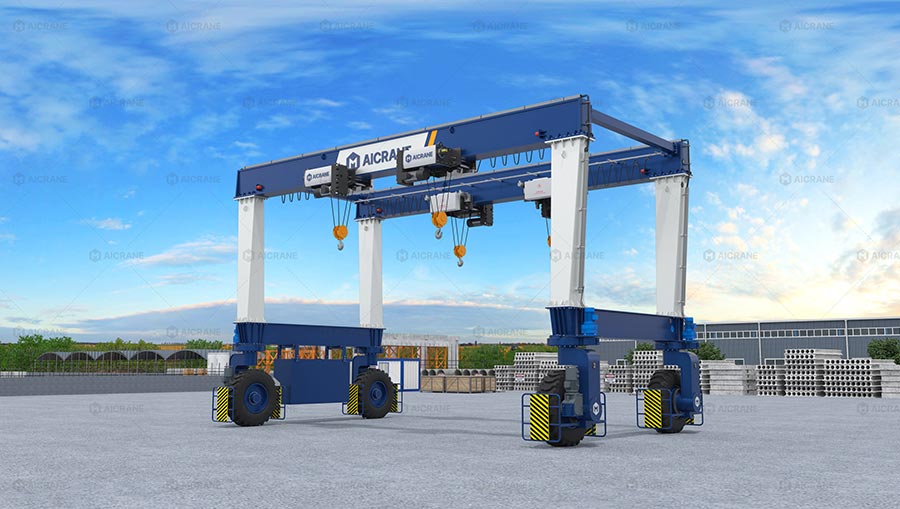
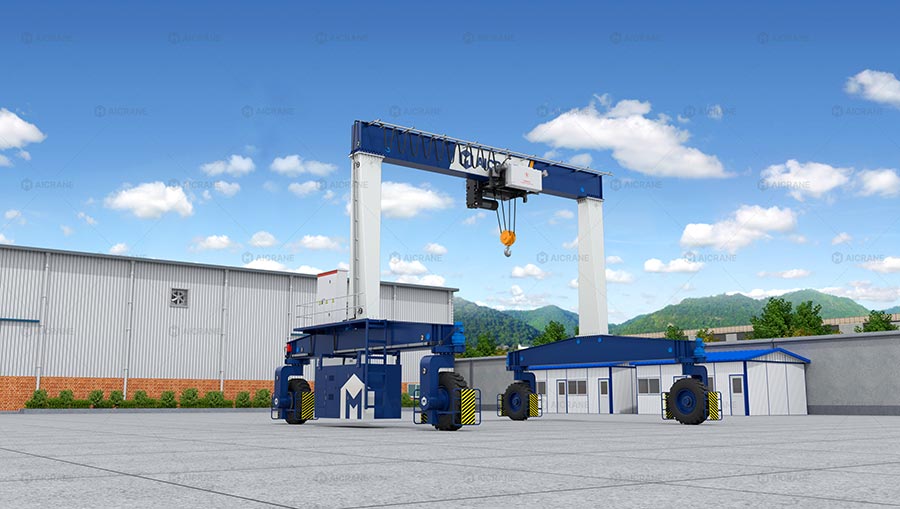
Rubber Tyred Gantry (RTG) cranes play a critical role in container terminals, logistics yards, intermodal facilities, and heavy industrial storage areas. As high-value, long-life assets operating in demanding outdoor environments, RTGs must deliver consistent performance, safety, and efficiency over decades. Choosing the right Rubber Tyred Gantry crane manufacturer is therefore not just a procurement decision – it is a strategic investment that affects operational reliability, lifecycle costs, and long-term competitiveness.
This article provides a comprehensive, practical framework for evaluating a reliable rubber tyred gantry crane manufacturer, covering engineering capability, manufacturing quality, compliance, service support, and risk management. Whether you are sourcing RTGs for a new terminal or expanding an existing yard, these evaluation criteria will help you make an informed and defensible decision.
1. Assess the Manufacturer’s Industry Experience and Track Record
A reliable RTG crane manufacturer should have proven experience specifically in RTG design and production – not just general crane manufacturing. RTGs are complex systems that integrate structural engineering, power systems, control technology, and mobility solutions under harsh outdoor conditions.
Key indicators to review include:
-
Number of RTG cranes delivered and commissioned
-
Years of experience in RTG manufacturing
-
References from ports, terminals, or industrial yards with similar operating conditions
-
Case studies demonstrating long-term operation rather than just delivery
Manufacturers with a strong RTG track record are more likely to anticipate real-world challenges such as uneven yard surfaces, wind loads, tire wear, and electrical system stability.
2. Evaluate Engineering and Design Capabilities
Engineering competence is the foundation of RTG crane reliability. A qualified gantry crane supplier should demonstrate strong in-house design capabilities rather than relying entirely on third-party engineering.
Key engineering aspects to evaluate:
-
Structural design methodology, including fatigue and dynamic load analysis
-
Use of Finite Element Analysis (FEA) for main girders, legs, and portal frames
-
Customization ability for span, lifting height, wheelbase, and stacking configuration
-
Wind load design tailored to local environmental conditions
-
Design margins aligned with international standards rather than minimum compliance
A reliable RTG manufacturer should be able to explain not only what they design, but why design decisions were made.
3. Review Manufacturing Facilities and Production Control
The physical manufacturing capability of an RTG crane manufacturer directly impacts quality, delivery time, and consistency. Buyers should look beyond brochures and verify actual factory conditions when possible.
Important manufacturing indicators include:
-
Dedicated RTG or large-structure fabrication workshops
-
Heavy-duty machining and plate processing equipment
-
Controlled welding environments for critical structural joints
-
Standardized production flow rather than one-off assembly
A manufacturer with organized production lines and clear quality checkpoints is far more likely to deliver mobile gantry cranes that meet design intent.
4. Examine Quality Management and Welding Standards
RTG cranes operate under cyclic loads, making structural integrity and welding quality critical. A reliable manufacturer must have a robust quality management system covering the entire production process.
Key quality aspects to verify:
-
Certified welding procedures and qualified welders
-
Non-destructive testing (NDT) such as ultrasonic or magnetic particle inspection
-
Material traceability from steel procurement to final assembly
-
Dimensional inspection of critical components
-
Documentation of quality records for future reference
Poor welding or inconsistent quality control can lead to fatigue cracks, alignment issues, and premature structural failure.
5. Check Compliance with International Standards and Regulations
A professional RTG crane manufacturer designs and builds equipment in accordance with recognized international standards. Compliance is not only about certification—it reflects engineering discipline and risk awareness.
Common standards include:
-
ISO standards for crane design and safety
-
FEM or EN standards for structural and mechanical components
-
CE conformity for European markets
-
Electrical standards such as IEC for control and power systems
Manufacturers should be able to clearly state which standards are applied and provide supporting documentation when requested.
6. Evaluate Electrical, Control, and Automation Capabilities
Modern RTG cranes rely heavily on electrical and control systems for efficiency, safety, and automation readiness. A reliable manufacturer must demonstrate competence beyond basic wiring.
Key evaluation points include:
-
PLC-based control architecture with clear logic documentation
-
Experience with diesel-electric, hybrid, or electric RTG systems
-
Anti-sway control integration and tuning capability
-
Fault diagnostics, alarms, and system redundancy
-
Readiness for future automation or remote operation upgrades
Manufacturers that outsource all electrical design may struggle with system integration and long-term support.
7. Assess Factory Acceptance Testing (FAT) and Commissioning Procedures
A serious RTG crane manufacturer like Aicrane treats testing as a critical phase, not a formality. Comprehensive Factory Acceptance Testing (FAT) reduces on-site risks and commissioning delays.
Reliable manufacturers typically offer:
-
No-load and full-load lifting tests
-
Traveling, steering, and braking tests
-
Electrical system and safety interlock verification
-
Control system simulation and fault testing
-
Detailed FAT reports signed by both parties
Strong FAT procedures demonstrate confidence in product quality and respect for the customer’s investment.
8. Review Installation and Commissioning Support
RTG crane performance depends not only on manufacturing quality but also on proper installation and commissioning. A reliable manufacturer should provide structured support during this phase.
Key aspects include:
-
Clear installation drawings and procedures
-
On-site or remote commissioning options
-
Experienced engineers familiar with RTG systems
-
Support during load testing and handover
-
Coordination with local contractors if applicable
Manufacturers who disengage after delivery often leave customers exposed to avoidable operational issues.
9. Analyze After-Sales Service and Spare Parts Support
RTG cranes are long-term assets with service lives often exceeding 20 years. Reliable manufacturers plan for the entire lifecycle, not just initial delivery.
Important after-sales indicators:
-
Availability of spare parts for structural, mechanical, and electrical systems
-
Reasonable lead times for critical components
-
Technical support response procedures
-
Maintenance manuals and training programs
-
Upgrade and retrofit capability for future needs
Strong after-sales support significantly reduces downtime and total cost of ownership.
10. Compare Price with Lifecycle Value, Not Just Initial Cost
While price is an important factor, focusing solely on the lowest upfront cost can be misleading. A reliable RTG crane manufacturer offers transparent pricing aligned with long-term value.
Consider:
-
Structural durability and fatigue life
-
Energy efficiency and operating costs
-
Maintenance requirements and spare parts pricing
-
Reliability and uptime over the crane’s lifetime
-
Risk of unplanned repairs or retrofits
A slightly higher initial investment often results in substantially lower lifecycle costs.
Conclusion
Evaluating a reliable Rubber Tyred Gantry crane manufacturer requires a holistic approach that goes far beyond technical specifications or price comparison. Engineering competence, manufacturing quality, standards compliance, testing discipline, and long-term service capability all play decisive roles in determining whether an RTG crane will perform safely and efficiently for decades.
By systematically assessing these factors, buyers can reduce project risk, protect operational continuity, and ensure that their RTG investment delivers sustained value throughout its lifecycle. In an industry where downtime is costly and safety is non-negotiable, choosing the right manufacturer is one of the most important decisions you will make.